Curb appeal starts on the sidewalk, but it doesn’t end at the front door. In Winnipeg, where winter wears the landscape like a badge and summer lasts just long enough to make you forgive the cold, a well-placed spa can turn a home from “nice place” into “we should have them over.” A hot tub is not just a backyard accessory. It is a beacon of comfort in January, a social magnet in July, and, if you plan it well, a design element that raises the perceived value of your property the moment someone steps onto your lot.
I have spent enough Saturdays watching homeowners try to hide their tubs behind cedars to know the difference between an eyesore in a box and a spa that elevates the whole property. The secret isn’t brand mystique or expensive decking. It is siting, sightlines, proportion, and a bit of honest thinking about how Winnipeggers actually live.
What curb appeal really means when we’re talking spas
Curb appeal isn’t only for the front yard. Realtors talk about it because first impressions do heavy lifting. When a hot tub shows up in the first five seconds of a showing, or peeks into the view from the front walkway, it frames the rest of the experience. Even if your tub is in the back, it still affects curb appeal indirectly. The line of sight from the kitchen window, the glow through a fence in winter, and the way the cover sits behind the garage all add or subtract value in a buyer’s head.
In Winnipeg, functional beauty carries weight. A Browse around this site cedar fence that stops the wind, a sturdy pergola with proper footings, a spa tucked into a protected corner, these show that the property is lived in and considered. When people search for “Winnipeg Hot Tubs” or “Hot tubs for sale,” they are not just shopping for jets and seats. They are shopping for a feeling: a house that knows how to weather February and host August without breaking a sweat.
Start with the block, not the brochure
Every hot tub buyer walks into a showroom, or types “Hot tubs store near me” into their phone, with a picture in mind. Then reality turns up with frost heaves and zoning setbacks. The smart move is to walk your property first. Stand where guests will stand. Look from the street, from the gate, from the primary bedroom. Think about the way snow piles against your fence in a north wind. Think about the trench you can safely dig without nicking a gas line. Winnipeg lots vary wildly, from narrow Crescentwood lanes to wider River Park South parcels, and the placement that makes a hot tub look intentional changes with the geometry.
I have seen a 7 by 7 tub transform a narrow St. James yard because the owner placed it square with the garage line, mirrored the cladding with horizontal cedar slats, and matched the stain to the back steps. The tub was not hidden. It was framed. By aligning the cabinet with existing architecture and respecting the scale, the tub looked like it had always belonged.
Make winter your ally
Cold is not the enemy. Cold is a design partner that forces clarity. In Winnipeg, a hot tub shines in winter if you make access and shelter a priority. A five-step trudge through drifts might be charming once, not on a Tuesday night in January. Keep the walk short, lit, and wind-blocked. South or west exposure gives you passive heat on clear afternoons, but on blustery days a north wind will slice through enthusiasm unless you break it with fencing or a pergola screen.
The visual cues matter as much as the practical ones. Warm light near the tub reads as comfort from the street. A simple, weather-rated sconce on a privacy wall, or low-voltage path lighting, gives off a glow that says this yard is used and loved even at minus twenty. In summer, the same fixtures fade into the garden, which is exactly what you want. Year-round utility looks good because it signals care.
The art of sightlines
Curb appeal with a hot tub happens in layers. The first layer is the approach. You do not need to advertise your spa to traffic. You need to guide a guest’s eye without confusion. From the gate, there should be a visual cue that tells people where to go next. This can be as small as a change in paver pattern or as literal as a waist-high planter that nudges the path left toward the spa terrace. The second layer is the reveal. You want to see a sliver of water or the top edge of a privacy wall, not the entire tub at once. Think of a movie that shows the car before the driver. Mystery invites movement.
Angles beat straight-on displays. A tub set at a slight diagonal, echoing the angle of the house or a fence, creates depth and gives you chances to hide the cover lifter behind a corner. The best curb appeal tells a quiet story: here is a garden, here is a seating nook, and here is the spa, right where it makes sense.
Size, shape, and the Winnipeg footprint
Hot tubs come in more sizes than most people think, from compact two-seaters to seven-person party vessels. Pick for your yard, not your ego. A larger tub can swallow a small yard, making the rest look like leftover space. A three to four person footprint, say 6 by 6, often balances better in older Winnipeg neighborhoods where lots are narrower. It is fine to buy a bigger tub if you host often or have a large family, but commit to the deck or terrace scale that makes it feel purposeful.
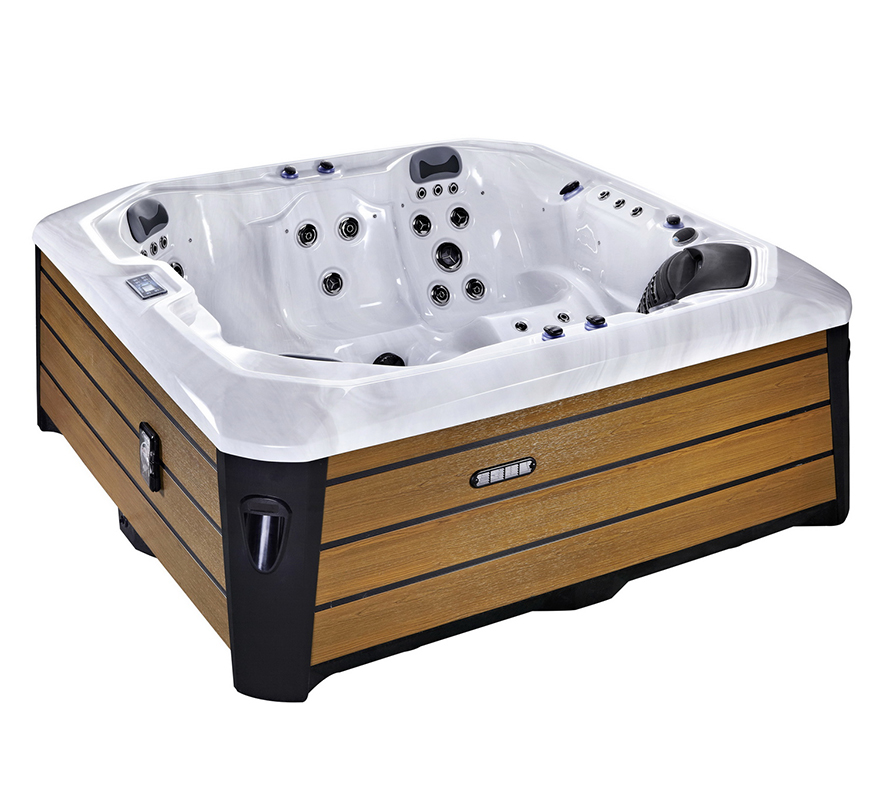
Corners matter. Rounded edges read softer from a distance, but square cabinets align better with modern decks. Every choice has a trade-off. If your style leans traditional, a cedar skirt and simple steps fit the Prairie Craftsman vibe. If you have a newer home with black windows and straight lines, a dark composite cabinet and porcelain-look pavers will echo the architecture. Either way, repeat materials, colors, or lines you already have. It is the visual rhyme that ties the spa into the property and enhances curb appeal.
Covers, lifters, and the not-so-glamorous bits
Nothing kills the effect faster than a sagging cover or a bulky lifter jutting into the open. Covers age, especially in the Winnipeg freeze-thaw cycle. A good, tight cover is insulation, a safety device, and a design element. The difference between a flat, low-profile cover in a color that matches the siding and a puffy, off-gray rectangle is the difference between sleek and sloppy.
Here is a quick, practical list that keeps curb appeal intact without turning your tub into a maintenance chore:
- Choose a cover lifter that parks the cover parallel to a privacy wall, not hovering like a billboard. Side-mount lifters often hide better than center-mount arms in small spaces. Keep steps proportional and stable. Wide treads look intentional and safer than narrow ladder steps, and they give you a chance to repeat deck materials. Add a small, integrated storage bench for chemicals and test strips so a plastic tote does not photobomb your yard. Use a drain point and splash zone that does not streak the patio or flood the flower bed. A simple gravel channel or French drain keeps things tidy. Replace the cover before it sags. In our climate, that can be every 4 to 6 years depending on use and exposure.
Heat, power, and Winnipeg realities
A spa that looks good but trips the breaker is not helping your curb appeal or your mood. Before you get seduced by shell colors and jet counts, check your electrical panel. Many Winnipeg homes can handle a 50 amp GFCI breaker for a standard 240V tub, but some older houses need a panel upgrade. Budget for it. Clean electrical work, with conduit routed neatly and a disconnect mounted square, actually elevates the look. Sloppy runs of cable tacked along a fence make a yard feel improvised.
Efficiency matters in winter. Insulation quality and a well-fitted cover save you hundreds over a season and keep the tub from frosting around the edges. A mid-size spa in Winnipeg might cost 30 to 60 dollars per month to run in winter if insulated well, higher if you have wind exposure or leave the cover open longer. These are not universal numbers, but they are realistic ranges I have seen on bills. Jetting and pumps affect noise, which in turn affects how the spa “reads” from the street. A quiet circulation pump and a well-sealed cabinet keep the hum down, and silence looks like quality.
Decks, pads, and the layer everyone forgets
The base under your hot tub has more to do with curb appeal than Instagram gives it credit for. If the tub settles crooked, if water ponds under the steps, or if your pavers frost heave, everything above looks tired. Concrete pads work, but not all pads are equal. A 4-inch slab on compacted base is standard. If you pour, take the extra hour to edge it crisp and square, or better yet, pour flush with surrounding pavers to make the tub feel integrated. In Winnipeg’s clay soils, a properly compacted base with geotextile under pavers saves you a spring of bad words.
Composite decks are tempting, and they can look great, but mind the joist spacing and ventilation. Spas are heavy. At 3,500 to 5,000 pounds filled with people, a tub needs support that respects the load. If you recess partially into a deck, leave service access. The fanciest flush install in River Heights will look shabby when you need to cut out boards to reach a pump.
Privacy without the fortress
Privacy sells the idea of the spa. You want shelter, not a bunker. In tight neighborhoods, the trick is to stage layers. A semi-opaque screen, some tall grasses, and a pergola beam create a sense of room while keeping air moving. Solid fences stop wind, but they can box in sound. Pick materials that match the house or fence you already have, and resist the urge to stack everything tall. Leave a slice of sky.
Planting zones matter as much as structures. In Winnipeg, ornamental grasses, columnar cedars, and hardy shrubs like dogwood or dwarf lilac handle the climate and create four-season interest. Snow on a cedar is a free winter accessory. Keep root systems at least a couple of feet from the tub so you are not fighting leaves in autumn or heaving roots in spring.
Lighting for looks and safety
Good lighting makes cheap pavers look expensive and expensive tubs look like sculpture. It also keeps you on your feet in February. Warm LEDs near the water line, shielded to avoid glare, add hospitality from the street without turning the yard into a billboard. A single switch inside the back door that controls a scene is worth wiring. Light the path, the step, and one vertical surface. Resist the floodlight temptation. Bright is not the same as welcoming.
If your spa has color-changing LEDs, pick a white or warm setting for daily use. Cycle-through rainbow modes have a time and place, and that time is not every evening when your neighbors are putting kids to bed.
Color choices that carry through the seasons
Winnipeg’s palette shifts hard. Snow reflects blue light in winter. Prairie sun warms everything in summer. Your spa cabinet and shell color should play nice with both. Medium to dark cabinets age gracefully and hide the inevitable splash marks. Light shells feel open and clean, but high-gloss white can read stark outside. If your home is dark-sided, a taupe or espresso cabinet with matte finish ties in well. If your home is pale stucco, a charcoal cabinet anchors the scene.
Repeat color in small ways. Stain the steps to match the fence. Use cushion fabrics that pull from the cabinet tone. Curb appeal is often a series of small agreements.
The buying experience, minus the gimmicks
You can browse “Hot tubs for sale” all day, but the real differentiators are wet tests, local service, and parts availability. Winnipeg dealers who have been around long enough to have a stack of winter stories are worth your time. Ask to sit in the tub while it runs. Jet placement, seat depth, and noise change with body size and water level. The most common complaint I hear after installs is not about heat or cost. It is about a lounger that floats a shorter person or a seat that hits the shoulder blades wrong. Wet tests solve that.
When you walk into a showroom after searching “Hot tubs store near me,” take photos of your yard, your deck, and the approach path. A good salesperson will talk you out of a bad idea once they understand your site. They will also know which models are easier to service in tight corners and which cover lifters work with your fence line.
Maintenance that looks invisible
Curb appeal suffers when chores become visible. A scum line around the water, a bleachy smell, a stack of empty chemical bottles, these tell a story you do not want to tell. Winnipeg water is hard. Expect to manage scale and balance. Use test strips or a digital tester weekly, and keep alkalinity in range to stabilize pH. If you are away often, a simple floater with bromine tabs keeps things steady. Ozonators and UV systems help, but they do not replace basic care.
Winter drains are a special case. If you close the tub for a deep cold stretch, drain and purge lines properly. Ice in a line can crack fittings, and leaks rarely help your reputation as a handy homeowner. Many people keep tubs hot all winter because the cost to maintain is lower than the risk and time of cycling down and back up. Either path can work, just do it deliberately.
Case sketches from around the city
A couple in St. Vital set their spa along the side yard, which at first glance sounded odd. That side was wider than the back, protected by the neighbor’s garage to the north, and already had a paved path. They added a waist-high cedar screen with a 6-inch reveal at the bottom so it did not feel heavy. The tub ended up visible from the front walk only as a warm glow in winter and a hint of steam above the fence. Their curb appeal improved because the front garden stopped doing all the work, the house felt alive from more angles, and the side-yard became an asset instead of a passageway.
Another homeowner in Tuxedo insisted on a flush set into a new composite deck. The installer built a removable panel on the service side and routed the lifter into a recessed pocket. The lines were clean, but the first winter revealed a flaw. Wind swept across the open deck and stole heat every time the cover lifted. They added a pergola with polycarbonate on the north edge, plus a simple privacy curtain for January. The change cut their winter energy use by a meaningful chunk and made the space look finished rather than showroom-staged.
In Wolseley, where yards are tight, a compact spa tucked behind a trellised grapevine became a secret garden. From the street, you could not see the tub, but you could see the trellis and hear a faint water feature. The perceived value went up because the yard felt designed, not crowded.
The social dividend
A hot tub that looks good does more than charm buyers. It changes how you use the house. In Winnipeg, neighbors notice. A well-lit, tidy spa area telegraphs welcome. You will host more, linger longer, and use the yard in shoulder seasons, which helps the rest of the property feel alive. Every night you are out there, the yard earns its keep and your investment pays back a little in memory and habit.
There is a corollary. Noise carries in cold air. Respect quiet hours. Keep music low. What improves curb appeal is not just the object, it is the way the household behaves around it.
Budgeting without false economy
You can blow the budget on features that do not show and then cheap out where everyone can see it. Reverse that. Spend on the base, the cover, the electrical, and the immediate hardscape. Buy a tub from a dealer who can service it in February. Save on gimmicks. Waterfalls look good on day one, less so when they calcify and sputter. A good jet package and a reliable heater beat extra screens you will stop using.
If your budget is tight, stage the project. First, set the base and power. Second, add the tub and a minimal privacy screen. Third, layer in planting and lighting. Each phase should look complete on its own so the yard never looks half-built. Curb appeal is cumulative.
A simple placement walk-through
If you want a crisp process that stops analysis paralysis, follow this sequence:
- Map paths from house to tub in all seasons, including where you will store boots and towels. Keep the walk short and wind-sheltered. Choose a location that can be seen from at least one interior room, ideally the kitchen or family room, to create a visual link that supports curb appeal year-round. Align the tub with an existing line, like a deck edge or fence, then offset slightly if you need depth. Test angles with tape on the ground. Plan utilities and base with longevity in mind, even if that means delaying furniture or extras. Good bones show. Add one anchor vertical element, like a screen or pergola post, to frame the spa without enclosing it completely.
Where the Winnipeg market helps you
Local availability matters. The city has a healthy mix of brands and dealers that understand our winters, stock parts, and answer phones in January. When you explore “Winnipeg Hot Tubs,” you will see this reflected in installation photos. Look for projects that resemble your yard. Ask dealers to show you winter installs, not just July glamour shots. If a showroom is pushing models hard with no mention of service, move on. When you search “Hot tubs for sale,” filter by warranty details and proximity of service techs. When you tap “Hot tubs store near me,” visit with specific yard photos and a tape measure reading of your gate width. You will save yourself a second trip.
Common mistakes that drain charm
People have a knack for repeating the same handful of missteps. The quick list: placing the tub too far from the back door, ignoring wind, over-sizing the unit for the yard, skipping thought on the cover lifter location, and mismatching materials. I once saw a bright white cabinet against a reddish cedar fence. The tub was fine, but the clash made the yard look noisy. A simple cabinet wrap in cedar slats fixed it, and the entire yard calmed down.
Another sneaky mistake is letting the spa dominate the yard narrative. If every path leads to the tub, you lose the layered feel that gives curb appeal its quiet power. Balance it with a small dining corner or a bench under a tree so the spa is part of a choreography, not the entire dance.
When resale is part of the goal
Hot tubs are lifestyle upgrades, not guaranteed equity machines. That said, a well-integrated spa can bump perceived value and shorten time on market. Buyers react to effort they do not have to put in themselves. A hot tub that looks easy to own and clearly sits where it should be will help them imagine using the space from day one. If you think you will sell within a couple of years, pick neutral cabinet colors, avoid niche shell patterns, and document maintenance. A tidy binder with receipts, water change logs, and a manual is unglamorous and wildly effective.
The quiet test
When you think you are done, do two things. First, stand on the sidewalk at dusk. Does the yard feel welcoming without shouting? Can you see a hint of the spa’s presence without a neon glow? Second, walk barefoot from the back door to the tub. Are there cold traps, puddles, or awkward reaches for a towel? Curb appeal starts at the curb, but it is earned by the way the space works when no one is looking.
A spa in Winnipeg is more than a place to soak. Done right, it is a year-round design element that tells a story about comfort, resilience, and the good sense to make February give you something back. Place it with care, frame it with intention, maintain it without drama, and your house will look better from the street, from the patio, and from every room that catches a glimpse of steam on a cold night.